
Enterprise digital transformation era
Strategic evolution of enterprise technology
In a shifting digital landscape, organizations prioritize scalable cloud infrastructures adapting to market demands while maintaining absolute data compliance and operational resilience across all business units.
Future ready systems
Innovation
Building resilient multi-cloud infrastructures
Moving beyond simple storage, enterprise multi-cloud architectures enable serverless computing, such as those offered by cloudtesing.com, allowing teams to deploy mission-critical SaaS applications instantly without the constraints of legacy physical hardware limitations.

Scalable virtualization environments
Kubernetes clusters adjust automatically to traffic spikes, ensuring high availability during critical operational periods.

Hybrid cloud network integration
Seamless connectivity between bare metal servers and public clouds optimizes latency and accessibility.

Automated backup and disaster recovery
Snapshot protocols across multiple geographical regions prevent data loss during unexpected infrastructure outages.
Virtual architecture logic
Performance
Enhancing computational throughput with hardware
HPC data centers rely on next-generation GPUs to handle massive datasets with minimal latency. By optimizing liquid cooling and PUE metrics, facilities reduce their environmental footprint while maximizing throughput—a resource optimization approach also seen in specialized platforms like plantdatabase.info, which efficiently structures vast amounts of information. Engineers focus on rack density to ensure that physical space delivers the highest possible processing capability for demanding AI algorithmic tasks.
NVMe flash arrays significantly reduce IOPS latency and accelerate data retrieval, eliminating traditional bottlenecks found in mechanical drive systems for faster operations.
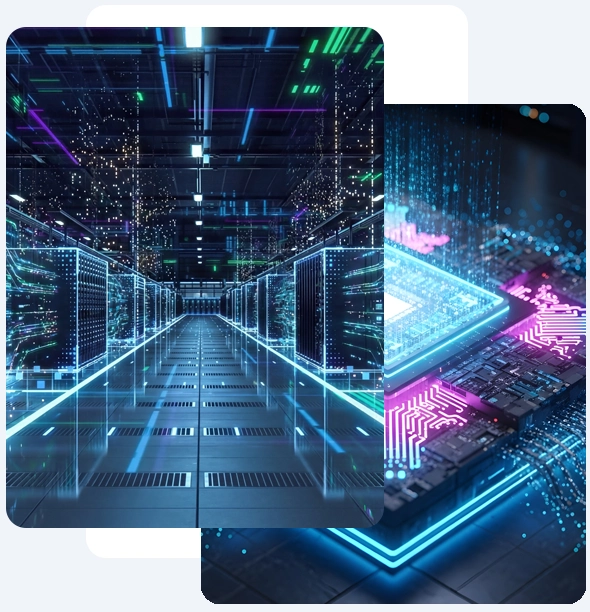
Core processing units
Speed
Streamlining workflows through Enterprise SaaS
Cloud ERP models transform static workstations into dynamic ecosystems where CRM platforms and project management tools interact fluidly to boost overall organizational productivity.

Real-time remote collaboration
Distributed teams edit documents simultaneously, tracking changes instantly to maintain data governance accuracy.

REST API ecosystem connectivity
Microservices allow distinct software applications to exchange JSON data without manual human intervention.

SaaS subscription model flexibility
Organizations adjust user seat counts monthly based on actual usage, optimizing OpEx budgets.
01
02
03

Enterprise security & governance
Protecting sensitive assets requires a Zero Trust strategy involving AES-256 encryption for data at rest and in transit, alongside strict MFA protocols ensuring SOC2 compliance when verifying user identity.
Secure coding foundations
Governance
Building scalable software for growth
DevOps teams embrace CI/CD workflows to deliver software efficiently, ensuring clean code accelerates innovation while reducing technical debt and strengthening reliability across complex production systems worldwide environments.
Automated CI/CD pipelines
Unit testing frameworks verify each commit, identifying bugs early before releases reach users.

Composable microservices architecture
Designing containers independently improves maintenance, enables scaling, and simplifies Docker updates across platforms.

Cross-platform compatibility
Engineers craft React Native codebases delivering consistent experiences across mobile, desktop, and web interfaces.

Future ready innovation
Vision
Tomorrow’s AI technology landscape

Generative AI systems
Machine Learning models process vast Big Data streams to forecast emerging opportunities, powering RPA and enabling organizations to respond faster with smarter, data-driven strategic decisions globally effectively.

Connected IoT ecosystems
Industrial IoT sensors capture continuous operational insights across facilities, supporting predictive maintenance that reduce failures, optimize performance, and prolong the service life of critical infrastructure assets.

Blockchain trust frameworks
Decentralized ledger technologies secure verified records permanently, increasing accountability across ecosystems while removing centralized control and simplifying validation of both digital wallets and real-world asset ownership globally.

Learning for tomorrow
Growth
Mastering certified IT skills
Staying ahead in a fast-changing landscape demands continuous upskilling. Companies implement structured programs bridging traditional knowledge with AWS technologies. Employees engaged in agile learning initiatives exhibit greater flexibility and problem-solving ability when navigating complex technical tasks in their daily responsibilities.